


Many pet parents reach for essential oils to help with stress, odors, or cleaning, but are essential oils safe for dogs? The short answer: sometimes. It depends on the oil, the concentration, and how you use it. Some essential oils can be used safely around dogs when diluted and diffused carefully, but many common oils are outright toxic, and concentrated forms of any oil pose serious risks. The key is knowing which oils fall into which category and understanding that "natural" does not automatically mean "safe for pets."
Are Essential Oils Safe for Dogs?
Essential oils are volatile aromatic compounds extracted from plants. They are found in everything from aromatherapy diffusers and cleaning products to herbal remedies and flea treatments. A common misconception that I’ve seen from pet parents is that because essential oils come from plants and are considered natural compounds, they are assumed to be harmless. That assumption can be dangerous.
According to the Merck Veterinary Manual, essential oils are rapidly absorbed through the skin, GI tract, lungs, and mucous membranes. The higher the concentration of the oil, the greater the risk. Concentrated essential oils should never be applied directly to pets.
Tea tree oil (melaleuca) is one of the most commonly reported essential oil toxicants in pets. But it is far from the only one that can cause problems. Whether an oil is safe depends on several factors:
The specific oil
Its concentration
The delivery method (diffused, applied topically, or ingested)
Your individual dog’s size and sensitivity
Puppies, senior dogs, and dogs with liver disease face higher risks because their bodies are less equipped to metabolize these compounds.
With the right precautions and your veterinarian's guidance, some essential oils can be part of a dog-friendly household.
Essential Oils That Are Safe for Dogs
A handful of essential oils are generally considered lower risk for dogs when used properly. "Lower risk" is the key phrase here. No essential oil is completely without risk, and individual dogs may react differently. Always consult your veterinarian before introducing any essential oil into your pet's environment.
These oils are commonly cited by veterinary sources as safer options for dogs:
Oil | Reported Benefits | Important Notes |
Lavender | Calming, soothing | One of the safer oils for dogs; use diluted only |
Chamomile | Anti-inflammatory, calming | May help soothe minor skin irritation in diluted form |
Frankincense | Immune support | Limited veterinary research; never apply directly |
Ginger | Anti-inflammatory, anti-nausea | Always dilute with a carrier oil |
Myrrh | Antiseptic properties | Use sparingly; always diluted |
Rosemary | Bug repellent, skin health | Avoid in dogs with epilepsy or seizure history |
Bergamot | Calming | Best used only in diffuser form in a ventilated room |
Even with these "safer" options, follow two rules:
Never apply any essential oil undiluted to your dog
Never allow your dog to ingest essential oils.
If you use an oil topically (with veterinary guidance), always dilute it heavily with a carrier oil like coconut or olive oil and prevent your dog from immediately licking it off.
Essential Oils That Are Toxic to Dogs
Some essential oils are dangerous enough that they should never be used around dogs in any form. These oils can cause toxic reactions through skin contact, ingestion, or even inhalation of concentrated vapors.
Oil | Primary Risk | Why It's Dangerous |
Tea tree (melaleuca) | Skin contact, ingestion, inhalation | Most common essential oil poison in pets; as few as 7 drops of 100% oil can cause severe toxicity |
Pennyroyal | Ingestion, skin contact | Causes hepatic necrosis (liver failure); historically used as a flea remedy, but extremely dangerous |
Wintergreen | Ingestion, skin contact | Contains methyl salicylate, which causes aspirin-like toxicity with vomiting and stomach ulcers |
Sweet birch | Ingestion, skin contact | Also high in methyl salicylate; similar risks to wintergreen |
Pine | Ingestion, skin contact | GI irritation, central nervous system effects, potential liver and kidney damage |
Peppermint | Ingestion, skin contact | Can cause vomiting, lethargy, tremors, and liver damage |
Eucalyptus | Ingestion, inhalation | Can cause seizures and nervous system damage |
Cinnamon/cassia | Ingestion, skin contact | Potentially hepatotoxic (liver-damaging) |
Clove | Ingestion, skin contact | Liver damage risk, central nervous system depression |
Ylang ylang | Ingestion, skin contact | Central nervous system depression, breathing difficulty |
Citrus oils (lemon, orange, grapefruit) | Ingestion, skin contact | Vomiting, diarrhea, potential liver damage |
Hyssop | Ingestion | Can cause seizures |
Sources: Merck Veterinary Manual, ASPCA Animal Poison Control
The Merck Veterinary Manual specifically identifies pennyroyal, tea tree, cassia bark, cinnamon, and birch tar as potentially hepatotoxic (liver-damaging). Birch, cedar, eucalyptus, hyssop, pennyroyal, sage, wintergreen, and wormwood are flagged as oils that can cause seizures.
If you currently have any of these oils in your home, store them securely in a cabinet your dog cannot access. Never use them in cleaning products on surfaces your dog walks on or licks, and avoid diffusing them in shared spaces.
Popular Essential Oils: Are They Safe or Dangerous for Dogs?
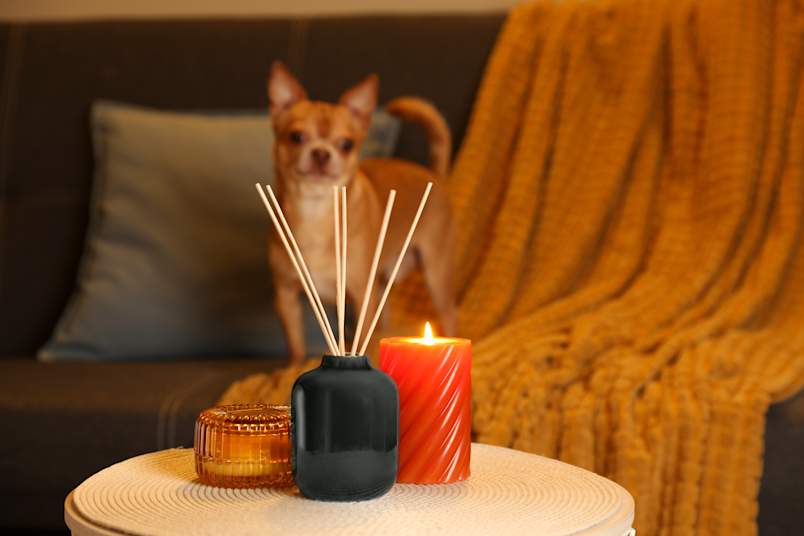
Some of the most-searched essential oil questions involve specific oils that pet owners already have at home. Here is what the veterinary evidence says about the most commonly asked-about oils.
Is Lavender Oil Safe for Dogs?
Generally, yes, with precautions. Lavender is one of the lower-risk essential oils for dogs and is commonly used for its calming properties. Some owners apply a small amount of diluted lavender oil to a bandana for car rides, and one study found a small amount of lavender in the car helped reduce travel-related anxiety in dogs.
That said, never apply undiluted lavender oil directly to your dog's skin or fur. If your dog licks concentrated lavender oil, it can cause GI upset. And if you also have cats, be aware that lavender poses more serious risks for felines.
Is Peppermint Oil Safe for Dogs?
No. Despite its popularity in human wellness, peppermint oil is on most veterinary toxic oil lists. It can cause vomiting, lethargy, and liver damage in dogs, especially in concentrated forms. Even diffused peppermint can irritate the respiratory system of sensitive dogs, particularly brachycephalic (flat-faced) breeds like Bulldogs and Pugs, who already have compromised airways.
Is Eucalyptus Oil Safe for Dogs?
No. The Merck Veterinary Manual lists eucalyptus among the essential oils that can cause seizures in animals. It is toxic to the nervous system and should be kept away from dogs entirely. This includes eucalyptus-scented cleaning products and the plant itself.
Is Tea Tree Oil Safe for Dogs?
No, not in concentrated form. Tea tree oil is one of the most frequently reported essential oil toxicants in pets. According to the ASPCA, as few as 7 to 8 drops of concentrated (100%) tea tree oil can cause serious toxicity in dogs. Symptoms can appear within 2 to 12 hours after exposure and may last up to 3 days.
However, some veterinary-formulated products contain tea tree oil at very low concentrations (less than 1-2%), such as certain pet shampoos. At these dilutions, when used as directed, the risk is much lower. The critical distinction is between concentrated tea tree oil (never safe) and heavily diluted, pet-specific products (potentially acceptable with veterinary guidance).
Are Essential Oil Diffusers Safe for Dogs?
Diffusers are one of the most common ways pet owners use essential oils at home, and the type of diffuser you use matters significantly for your dog's safety.
The Merck Veterinary Manual distinguishes between two categories:
Diffuser Type | Examples | Risk Level | How It Works |
Passive | Reed diffusers, scented candles | Lower risk | Releases fragrance through evaporation; does not emit oil droplets into the air |
Active (ultrasonic) | Ultrasonic mist diffusers | Moderate risk | Emits microdroplets of oil into the air that can land on fur and be ingested during grooming |
Active (nebulizing) | Nebulizing diffusers | Higher risk | Emits concentrated oil particles; poses the greatest inhalation and skin absorption risk |
Passive diffusers are generally safer because they do not release actual oil droplets into the air. Unless a reed diffuser is knocked over and your dog contacts the liquid directly, the primary concern is mild respiratory irritation from the scent.
Active diffusers are riskier because the oil microdroplets they emit can settle on your dog's coat. When your dog grooms themselves, they can ingest those oil particles.
If you choose to use a diffuser around your dog, the ASPCA recommends keeping it in a secured area your dog cannot access and running it for short periods only. The Merck Veterinary Manual recommends diffusing for less than 30 minutes and ventilating the room afterward. Your dog should not be confined to the room and should always be able to leave the room if the scent bothers them.
Avoid diffusing any oil from the toxic list above, regardless of the diffuser type.
Signs of Essential Oil Poisoning in Dogs
Essential oil poisoning symptoms can appear within minutes to hours of exposure, depending on the oil, concentration, and how your dog was exposed. Knowing what to look for can help you act quickly. The most common signs of essential oil toxicity in dogs include
Vomiting
Lethargy
Drooling
Ataxia (unsteady or drunken walking)
Loss of appetite
More severe cases can involve tremors, seizures, difficulty breathing, hypothermia, and organ damage. Here is how to gauge the severity:
Call Your Vet (Mild to Moderate) | Emergency: Go to the Vet Now |
Mild drooling or lip-licking | Persistent or bloody vomiting |
Decreased appetite | Muscle tremors or seizures |
Mild agitation or pawing at the face | Difficulty breathing or wheezing |
Single episode of vomiting | Inability to walk or stand |
Slight lethargy | Collapse or unresponsiveness |
Sneezing or watery eyes (from inhalation) | Low body temperature, pale gums, or rapid heartbeat |
You may also notice the smell of essential oil on your dog's coat, breath, or in their vomit. That scent can be a helpful clue for your veterinarian.
Symptoms from inhalation specifically can include watery eyes, nasal discharge, coughing, and wheezing. If your dog has a pre-existing respiratory condition like chronic bronchitis, even mild inhalation exposure can escalate quickly.
What to Do If Your Dog Is Exposed to Essential Oils
If you suspect your dog has had contact with or ingested essential oils, take these steps:
Remove the source. Turn off any diffusers immediately and move your dog to fresh air.
Clean their skin or fur. If oil is on your dog's coat or paws, gently wipe it off with a damp cloth or wash the area with liquid dish soap (like Dawn). Avoid rinsing with water alone, which can spread the oil.
Do not induce vomiting. Essential oils can cause aspiration pneumonia if vomited back up. Both the Merck Veterinary Manual and Pet Poison Helpline advise against inducing vomiting with oil products.
Call your veterinarian or the Pet Poison Helpline (855-764-7661) immediately. Have the oil container or product label ready so you can tell them exactly what your dog was exposed to, how much, and when. The ASPCA Animal Poison Control Center (888-426-4435) is another 24/7 option. Note: Both hotlines charge a consultation fee ($75-95 per incident).
Bring the product with you. If you need to take your dog to the vet or emergency clinic, bring the essential oil container so the veterinary team can identify the specific compounds involved.
Keep your dog calm during transport. Use a towel or blanket that has not been exposed to the oil.
The good news: with rapid treatment, the prognosis for essential oil poisoning is generally good. According to the Pet Poison Helpline, clinical signs may take 3 to 7 days to fully resolve, but most dogs recover well when treated promptly. Treatment typically includes supportive care such as IV fluids, anti-nausea medications, liver protectants, and monitoring.
For more on how pet poison control hotlines work and when to call, see our dedicated guide.
How to Use Essential Oils Safely Around Dogs
If you want to continue using essential oils in your home, you can do so more safely by following these guidelines:
Choose oils carefully. Only use oils from the "generally safe" list and avoid all oils on the toxic list. When in doubt, ask your veterinarian.
Never apply undiluted oils. If your vet approves topical use for a specific purpose, always dilute the essential oil heavily with a carrier oil (such as coconut oil or olive oil) before any skin contact.
Use passive diffusers when possible. Reed diffusers pose less risk than ultrasonic or nebulizing models because they do not emit oil droplets into the air.
Limit diffusion time. Run diffusers for less than 30 minutes at a time in a well-ventilated room. Open a window or door if possible.
Give your dog an exit. Your dog should always be able to leave the room where a diffuser is running. Never diffuse oils in a crate, small bathroom, or enclosed space with your dog.
Watch for behavioral cues. If your dog sneezes, moves away, becomes restless, or rubs their face after you start diffusing, they are telling you the scent is bothering them. Turn off the diffuser and move your dog to fresh air.
Store all oils securely. Keep bottles in a closed cabinet or high shelf. Dogs are curious, and a knocked-over bottle of concentrated oil can become an emergency fast.
Take extra care with vulnerable dogs. Puppies, senior dogs, dogs with liver disease, and brachycephalic breeds (Bulldogs, Pugs, Boston Terriers) are more susceptible to respiratory irritation and toxicity.
What About Cats and Other Pets?
If you share your home with cats, birds, or other small animals in addition to your dog, essential oil safety becomes even more complex.
Cats are significantly more sensitive to essential oils than dogs. According to the Merck Veterinary Manual, cats are deficient in the enzyme glucuronyl transferase, which means they cannot metabolize many of the compounds found in essential oils. Oils that might be tolerable for a dog can cause serious toxicity in a cat. For a detailed guide on feline-specific risks, see our article on essential oils safe for cats.
Birds have uniquely sensitive respiratory systems and are at high risk from any airborne oil particles. The ASPCA recommends avoiding essential oil diffusers entirely if you have birds in your home.
Small mammals like rabbits, guinea pigs, and hamsters also face risks from essential oil exposure. Their small body size and sensitive respiratory systems mean even low concentrations can be problematic.
The safest approach for multi-pet households: follow the safety rules for your most sensitive pet. If you have a cat and a dog, the cat's restrictions, rather than the dog’s, should guide your oil use.
How Pet Insurance Covers Essential Oil Emergencies
Emergency vet visits for poisoning can add up quickly. Between the initial exam, bloodwork, IV fluids, medications, and monitoring, treatment for essential oil toxicity can range from a few hundred dollars for mild cases to $1,000 or more for severe toxicity requiring overnight hospitalization and liver support.
The ASPCA Poison Control or Pet Poison Helpline consultation fee alone runs $75-95, and that is before your dog even sees a veterinarian.
This is where pet insurance provides real peace of mind. Embrace's accident and illness policy covers emergency vet visits for accidental poisoning, including essential oil exposure. That means the exam, bloodwork, IV fluids, medications, and hospitalization can all be covered. Rather than hesitating over cost while your dog needs urgent care, you can focus on getting them treated right away.
If you are not currently insured, it is worth considering sooner rather than later, since dog insurance only covers conditions that develop after your policy begins. Being proactive about coverage means you are prepared when the unexpected happens. You can also reach out to PawSupport, Embrace's 24/7 veterinary telehealth line, for guidance if you are unsure whether your dog's exposure warrants an emergency visit.